
Last updated November 21, 2026
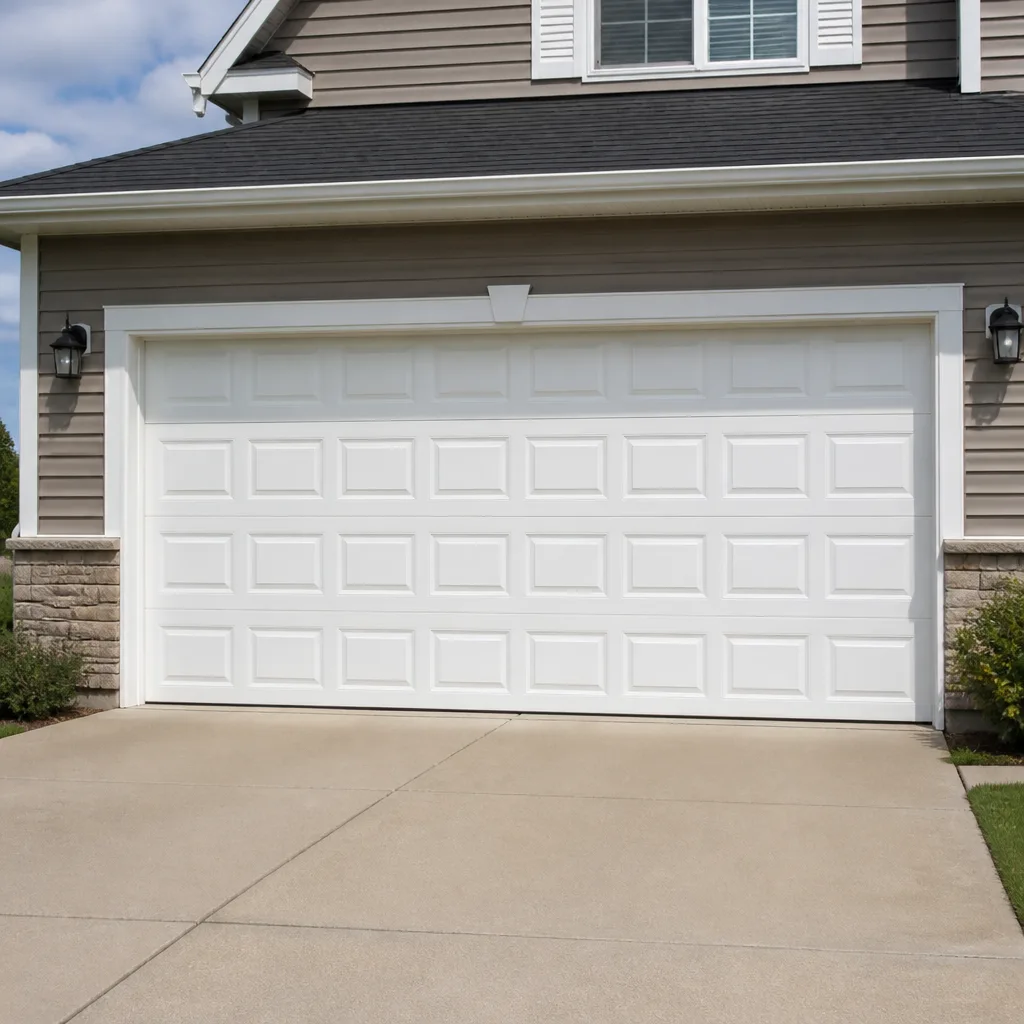 Raised-panel steel
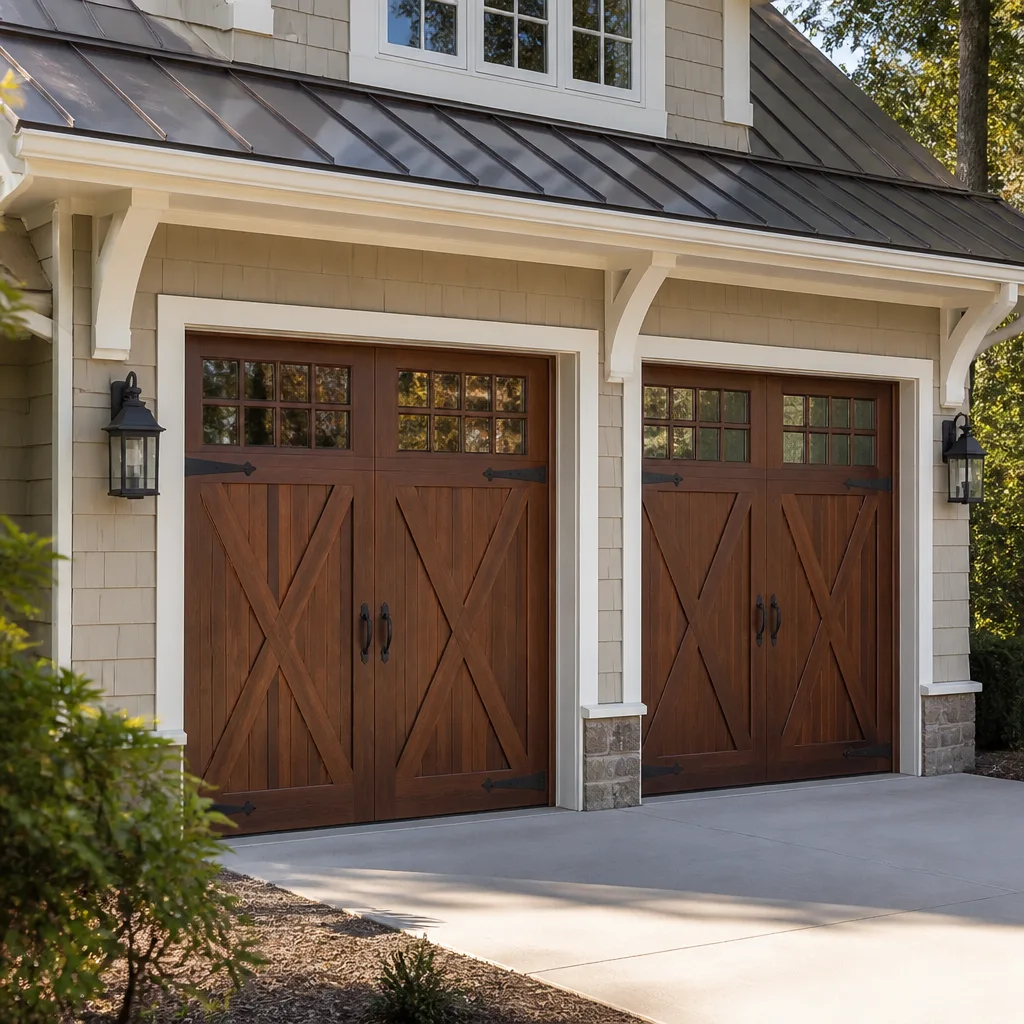 Carriage house
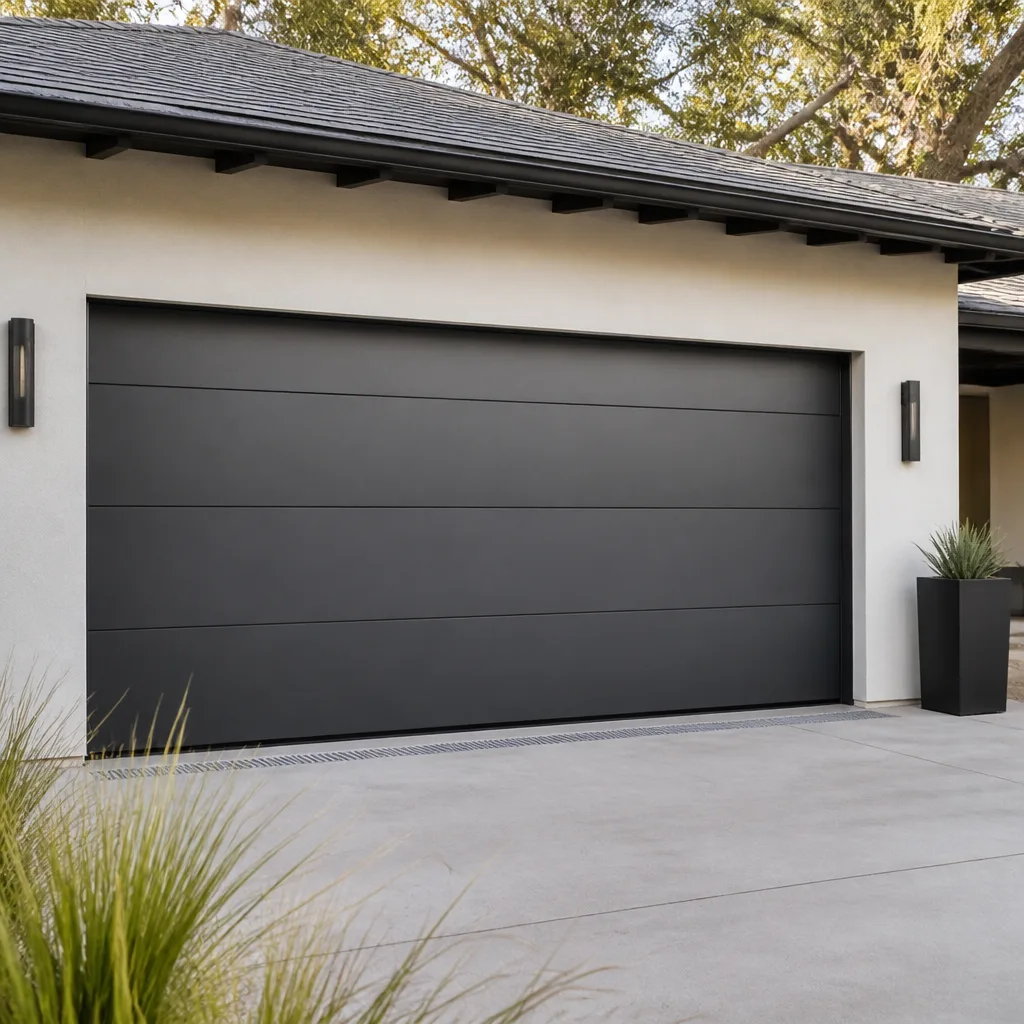 Modern flush
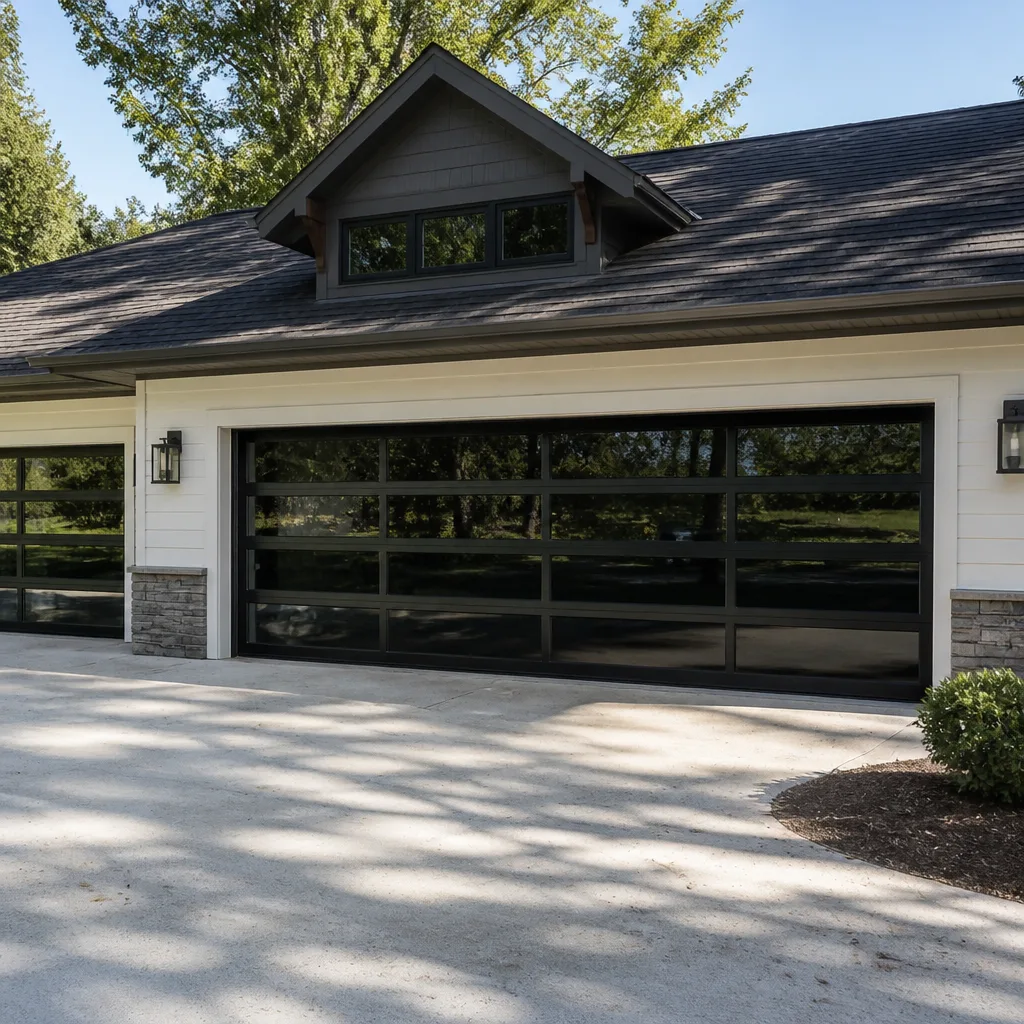 Full-view glass
 LiftMaster openers
 Chamberlain openers
Full 25-point door and opener safety check with every visit - springs, cables, rollers, tracks, and your LiftMaster or Chamberlain opener included
You get a price before we start. It does not change when the pro arrives.
Get your free estimateGarage Door Warning Signs: A Borough Park Homeowner’s Reference Guide
A garage door that hesitates for a second before it opens isn’t “getting old.” That pause usually means the spring tension is off, and in our experience that signal has roughly a two-week shelf life before it turns into a snapped spring and a car trapped inside. Most failures we’re called out to in Borough Park gave plenty of notice first. The door groaned. It drifted to one side. A cable frayed. Nobody read the signs because nobody told them what the signs mean. This guide fixes that. You’ll learn which sounds point to which part, which movement problems you can watch and which you should stop using the door over, and what you can safely check yourself from the ground.
Quick Answer
The main garage door warning signs are grinding or popping sounds, a door that travels unevenly or shudders, a slow or jerky reversal, visibly frayed cables, gaps or stretch marks in the springs, and worn or flat rollers. Grinding, popping, and visible cable damage are stop-using-the-door signals. Squealing and minor roller noise are schedule-soon signals. In Borough Park’s older attached garages, limited headroom puts extra compression on the springs, so these signs tend to show up faster than homeowners expect.
Styles & brands we work with
- Raised-panel steel
- Carriage house
- Modern flush
- Full-view glass
- LiftMaster openers
- Chamberlain openers
Table of Contents
- What the Sounds Are Telling You: A Sound-Based Diagnostic
- Movement Warning Signs and What Each One Implicates
- Visual Checks You Can Safely Do From Ground Level
- Schedule Soon vs. Stop Using the Door Now
- Why Warning Signs Appear Faster in Borough Park’s Older Attached Garages
- Opener-Specific Signals: LiftMaster, Chamberlain, Genie, and Clopay
- A Simple Monthly Inspection Routine
- Common Mistakes to Avoid
What the Sounds Are Telling You: A Sound-Based Diagnostic
Your ears are the first diagnostic tool you own. Garage doors make noise by design, but the type of noise matters more than the volume. Here’s how we separate them.
- Grinding points to metal-on-metal contact. Usually worn rollers, dry hinges, or a torsion tube that’s shifted in its bearings. Grinding that gets louder over a few days is a schedule-soon signal. Grinding paired with the door stalling is a stop-now signal.
- Popping is the sound of a torsion spring losing tension in stages, or a cable jumping its drum. Popping is never routine. It’s the sound right before a spring lets go, and it’s your cue to stop operating the door.
- Squealing is almost always friction: rollers that have lost their lubrication, or nylon rollers worn down to the shaft. Annoying, not dangerous, but it accelerates wear on everything around it.
- Banging when the door hits the floor or the header means the travel limits are off, or a spring has already failed and the opener is doing all the lifting. That’s hard on the opener and hard on the door.
- A single loud snap followed by the door becoming very heavy to lift is a broken spring. Stop there. Don’t try to cycle it again.
The important thing about sound in Borough Park is that attached garages sit directly under or beside living space. You hear everything, which is an advantage: a noise you’d ignore in a detached garage in another part of Brooklyn is one you’ll notice in your own hallway. Use that. If a sound is new this month, it’s worth a look.
When a noise needs a trained ear, that’s a garage door repair call, not a wait-and-see.
Movement Warning Signs and What Each One Implicates
Watch the door travel from the bottom to the top a few times. A healthy door moves in a straight, even line at a steady pace. Anything else points to a specific component.
- The door drifts to one side as it rises. A stretched or unevenly adjusted cable on one side, or a spring winding that’s out of balance. Left alone, this loads one track and one roller with the whole door’s weight.
- The door shudders or shakes on the way up. Worn rollers, a bent track, or hinges that have loosened from the panel. Shuddering is the most common early sign we see on older doors in Borough Park, and it’s usually cheap to catch early.
- The door hesitates before it opens or closes. Spring tension is off, or the opener is straining against a door that’s heavier than it should be. This is the “one-second pause” from the top of this guide. It’s a schedule-soon sign that turns into a stop-now sign within about two weeks.
- Reversal is slow or jerky. The safety reverse system is the last line of defense for anyone standing under the door. A slow reversal means the opener or its sensors need attention now, not later.
- The door doesn’t close all the way, or opens by itself. Travel limits, a misaligned sensor, or a logic board problem in the opener. On a LiftMaster or Chamberlain unit, this is usually a limit switch or a sensor alignment issue, both quick fixes when caught early.
- The door comes down hard and bounces. The bottom seal is gone, the travel limit is set too low, or the springs are no longer cushioning the last few inches.
One useful rule: movement problems that appear only in cold weather and disappear when it warms up are about contraction in the tracks and cables. Problems that happen every single cycle are about a worn component. The second kind needs attention before it becomes the first kind plus a broken part.
Visual Checks You Can Safely Do From Ground Level
You don’t need to climb anything to spot most of what goes wrong. These checks take about three minutes and require no tools. What we’re describing here is what to look at, not how to repair it. Springs and cables are a safety job, and the repair itself belongs to a trained technician.
- Cables. Look along each side of the door. The cables should be taut and lie evenly in their drums. Frayed strands, a cable that has jumped its drum, or slack on one side are stop-now signals.
- Springs. From the ground, look at the coil above the door (or along the sides, on older extension-spring setups). A healthy spring looks uniform. A visible gap in the coil, a stretched section, or rust blooming along the wire all mean the spring is on its way out.
- Rollers and hinges. Look at the rollers in the track. Worn rollers look flat or chipped rather than round. Hinges that have pulled loose from the panel leave a gap at the seam.
- Tracks. The vertical and horizontal tracks should be straight and parallel. A dent, a bend, or debris in the channel will drag the door off line.
- Weather seal. A cracked or missing bottom seal lets cold air and water into the garage. On a Borough Park attached garage that’s shared with a laundry room or a storage area, that moisture is a problem for the door and everything behind it.
- The photo-eye sensors. Both sensors at the bottom of the tracks should be aligned, clean, and lit. A blinking sensor light is the single most common cause of a door that won’t close.
If anything on this list looks wrong, don’t run the door to “see if it’s still working.” Testing a damaged spring or cable is how people get hurt. Call a trained technician.
Schedule Soon vs. Stop Using the Door Now
The most useful thing this guide can do is tell you which signs mean “book a repair” and which mean “stop and call.” Here’s the split we use.
Stop Using the Door Now
- A loud snap followed by a door that’s suddenly very heavy to lift. That’s a broken spring.
- A visibly frayed, slack, or jumped cable.
- Popping from the torsion assembly above the door.
- Any visible gap in the spring coil.
- The door hanging crooked, jammed in the track, or a panel that has come off its hinges.
- Any situation where someone is trapped in the garage because the door won’t open.
When one of these happens, stop operating the door and call. Emergency response is a core part of what we do, and it exists for exactly this: a door that leaves a home unsecured or a car trapped. Call (888) 784-3292. We answer 24/7. Fast dispatch from 7am to 7pm, Sunday through Friday.
Schedule Soon
- Grinding, squealing, or squeaking that’s new but the door still moves normally.
- Shuddering or minor vibration.
- The one-second hesitation before opening.
- A door that closes hard and bounces.
- Worn rollers you can spot visually.
- A single opener remote that’s stopped working, or a sensor light that blinks but the door still moves.
None of these are emergencies today. All of them become one if you let them run. The stop-now list is roughly where the schedule-soon list ends up if it’s ignored for a season.
For anything on the schedule-soon list, a garage door opener repair visit often catches the opener and door problems together, since the two wear each other down.
Why Warning Signs Appear Faster in Borough Park’s Older Attached Garages
Borough Park’s housing stock is dominated by attached garages tucked under or behind the main structure, and that layout puts the door under conditions a detached garage never sees. Two things happen as a result.
First, limited headroom. Many of these garages were built before today’s standard door sizes, so the torsion system sits close to the ceiling and the door has a shorter travel than it was designed for in a wider space. That means the spring has to work harder on every cycle, and springs wear faster. The same compression forces show up in the wear pattern on rollers and tracks, which is why shuddering shows up earlier in these garages than in more modern construction.
Second, the door is part of the thermal envelope. An attached garage shares walls with living space, so it’s hotter in summer and colder in winter than a detached one. The door and its springs cycle through more temperature change, and tracks and cables shrink and expand more. That’s not a reason to panic, but it is a reason to look at the door more often than a homeowner in a newer subdivision would. In our experience, doors in these attached setups need a full check at least once a year, and more like twice a year if you use the door several times a day.
The neighborhoods we see this in most are the ones with the densest attached-garage rows: along the side streets running off 13th Avenue and 18th Avenue, and in the blocks near 50th Street and Fort Hamilton Parkway. The exact address doesn’t change the diagnosis. The building type does.
Opener-Specific Signals: LiftMaster, Chamberlain, Genie, and Clopay
Your opener has its own vocabulary of warning signs, separate from the door itself. The opener is often the messenger for a door problem: it’s working harder because the door is heavier, and it starts behaving oddly as a result.
- LiftMaster and Chamberlain: these share a lot of internal architecture, and both use a safety reverse system that gets fussy when the door is dragging. A door that reverses partway down, or a wall control that flashes a diagnostic code, is usually telling you about a limit switch, a sensor, or a door that’s binding in the track.
- Genie: a Genie that runs but doesn’t move the door, or that runs briefly and stops, often has a stripped gear or a worn drive. That’s an opener problem, not a door problem, and it needs a technician who knows the model.
- Clopay doors: the door itself is the signal here. A Clopay panel that’s bowed or a section that’s pulled loose from its hinge points to a heavier-than-expected load on the opener, which then shows up as hesitation or stalling.
This is where brand familiarity earns its keep. We service equipment from eight brands, including LiftMaster, Chamberlain, Genie, Clopay, Amarr, Wayne Dalton, Craftsman, and Raynor, which means the technician arriving at your door already knows the model, the common failure points, and the right parts. Your exact brand, serviced correctly, saves the visit where someone else is figuring it out on-site.
If the opener itself has failed outright and the door is stuck, that’s an emergency situation in our book, and we treat it as one.
A Simple Monthly Inspection Routine
Three minutes a month is enough to catch nearly every warning sign on this list while it’s still cheap to fix. Here’s the routine we recommend to Borough Park homeowners.
- Listen. Run the door once. Stand still and just listen. Any sound that’s new since last month goes on your list.
- Watch the travel. Check for a straight, even line and steady speed. Look for hesitation or drift.
- Look at the springs and cables. From the ground, not on a ladder. Gaps, rust, fraying, or slack.
- Check the rollers and hinges. Round rollers, tight hinges, no gaps at the seams.
- Test the safety reverse. With the door open, place a small object in the door’s path and run the close cycle. The door should reverse on contact. If it doesn’t, stop using the door and call.
- Look at the bottom seal. Cracked, missing, or hanging off.
- Clean the sensors. A quick wipe of both photo-eyes removes most false stops.
Write down what you find, even if it’s nothing. A dated list is how you tell a fresh problem from a slow one. If the same sound has been on your list for two months, that’s the month to call.
Common Mistakes to Avoid
- Testing a broken spring by running the door again. Every cycle with a broken spring transfers the full weight of the door into the opener and cables. The opener can’t lift it, and the cables are now carrying a load they weren’t designed for. Stop and call.
- Climbing up to “take a look” at the torsion assembly. The spring above the door is under enough tension to cause serious injury if it’s disturbed. Ground-level inspection is the whole point of this guide. Anything above that is a technician’s job.
- Waiting for the hesitation to go away. The one-second pause at the top of this guide doesn’t fix itself. It’s a tension problem, and it’s the single most predictable countdown to a broken spring we see in Borough Park.
- Lubricating a problem instead of fixing it. Grease on a squealing roller buys you a week of quiet and hides the wear underneath. Squealing means replace, not re-grease.
- Calling a general handyman for a spring or opener job. The tools and the training are specific to garage doors, and a generalist is figuring out the job on your time. This is one trade where the specialist route saves both money and risk.
- Replacing the opener to fix a door problem. If the door is heavy because the spring is failing, a new opener inherits the same load and fails the same way. Diagnose the door first.
- Assuming an older door just sounds like that. In Borough Park’s attached garages, everyone hears their door more often than a detached-garage owner does, and the natural assumption is that noise is normal. It isn’t. Noise has a cause, and the cause is almost always fixable.
See the difference
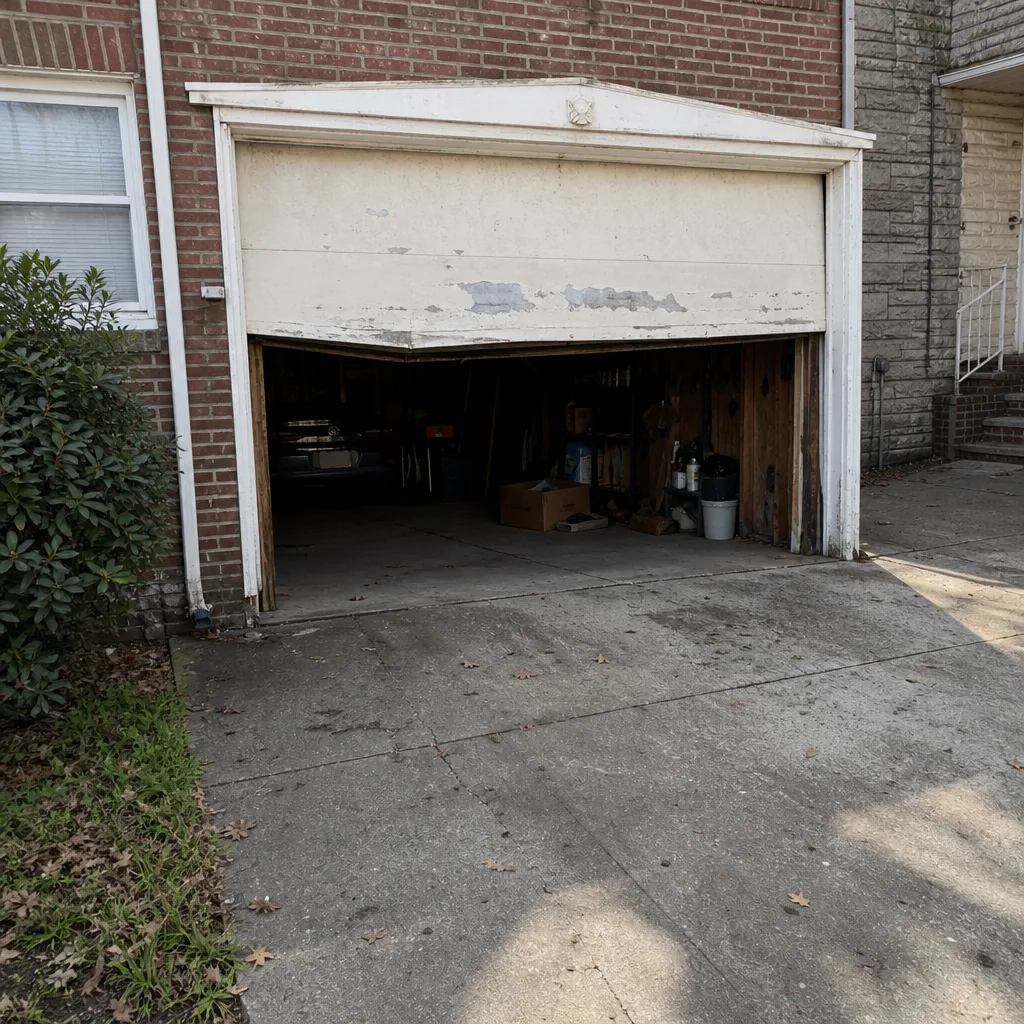 Before
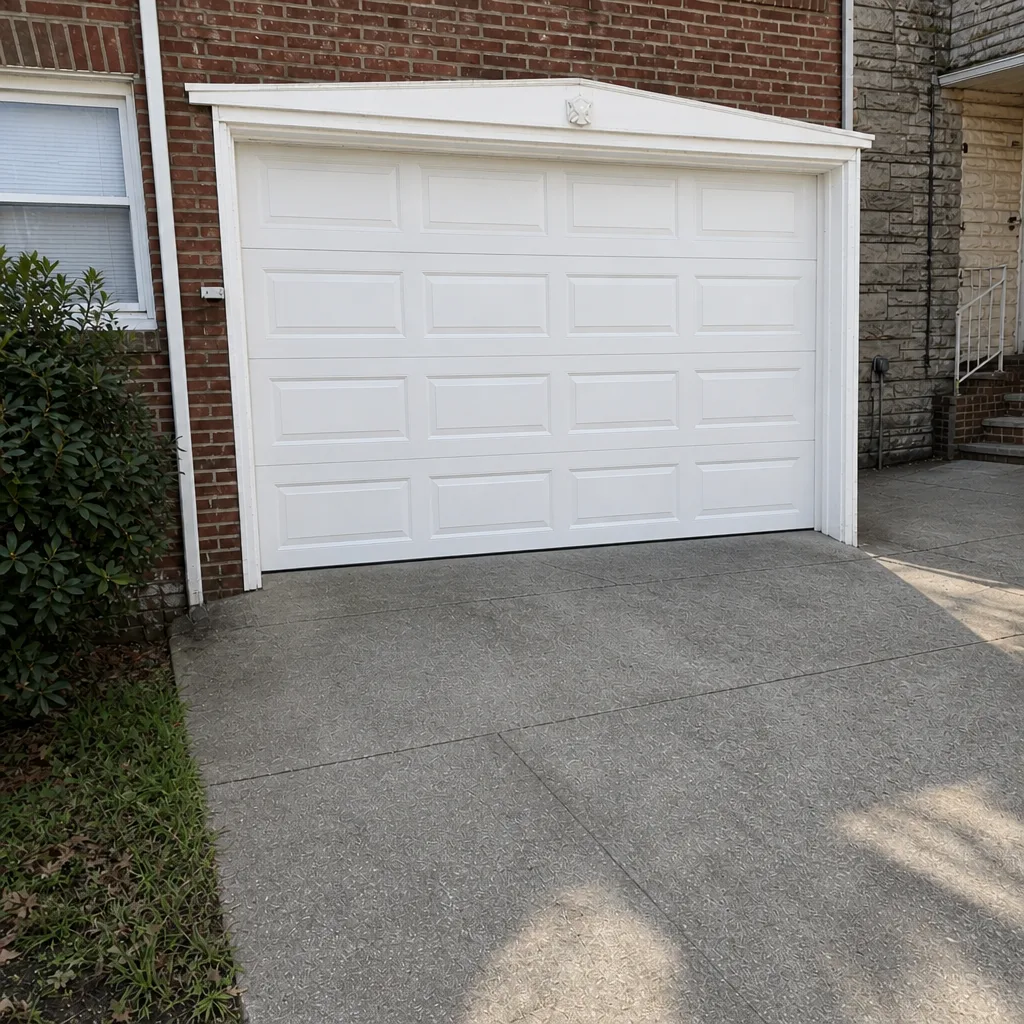 After
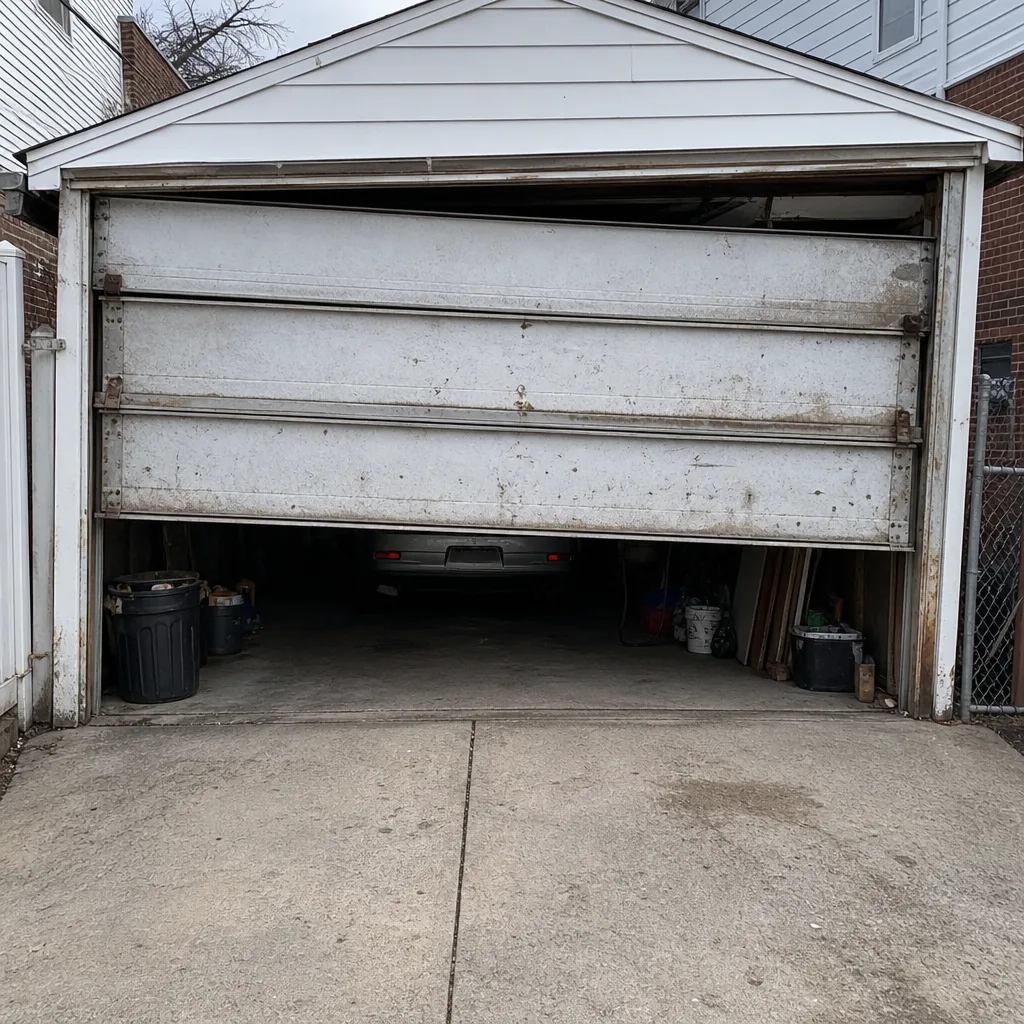 Before
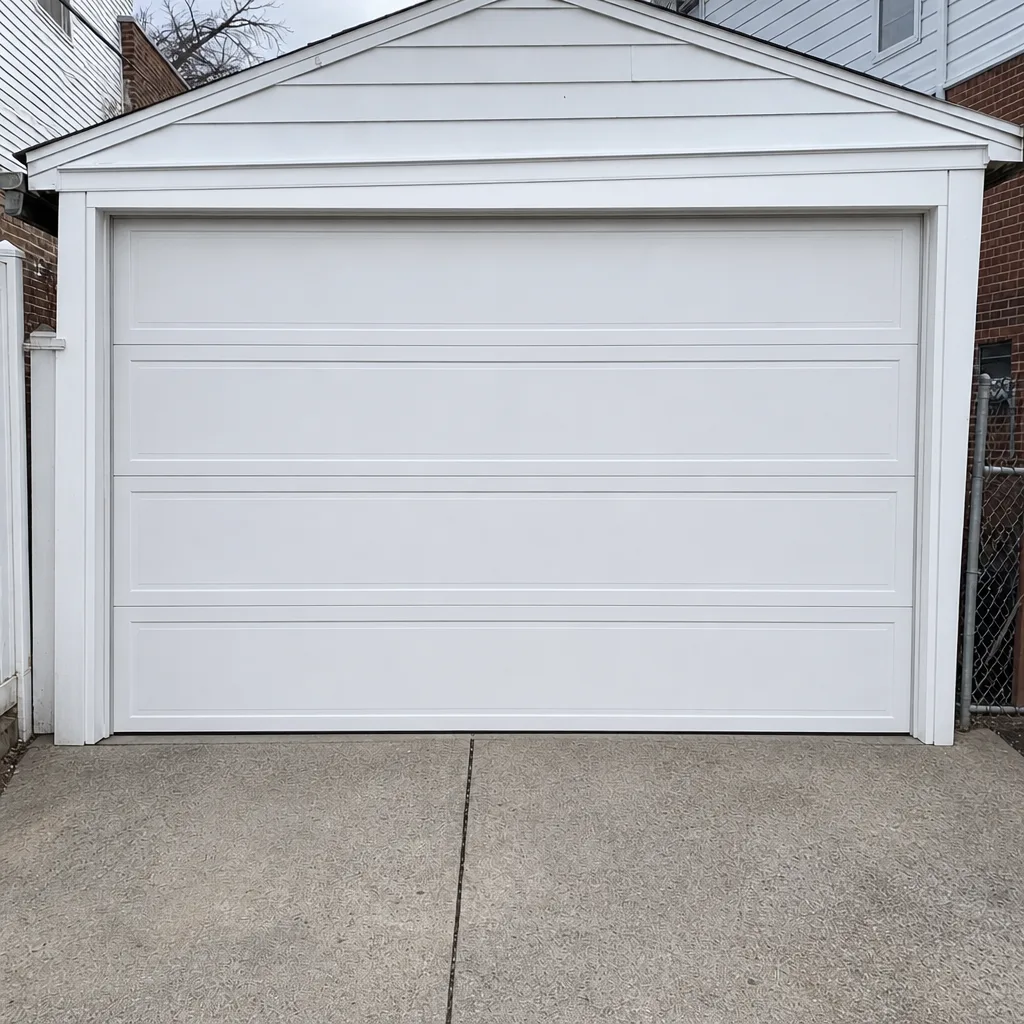 After
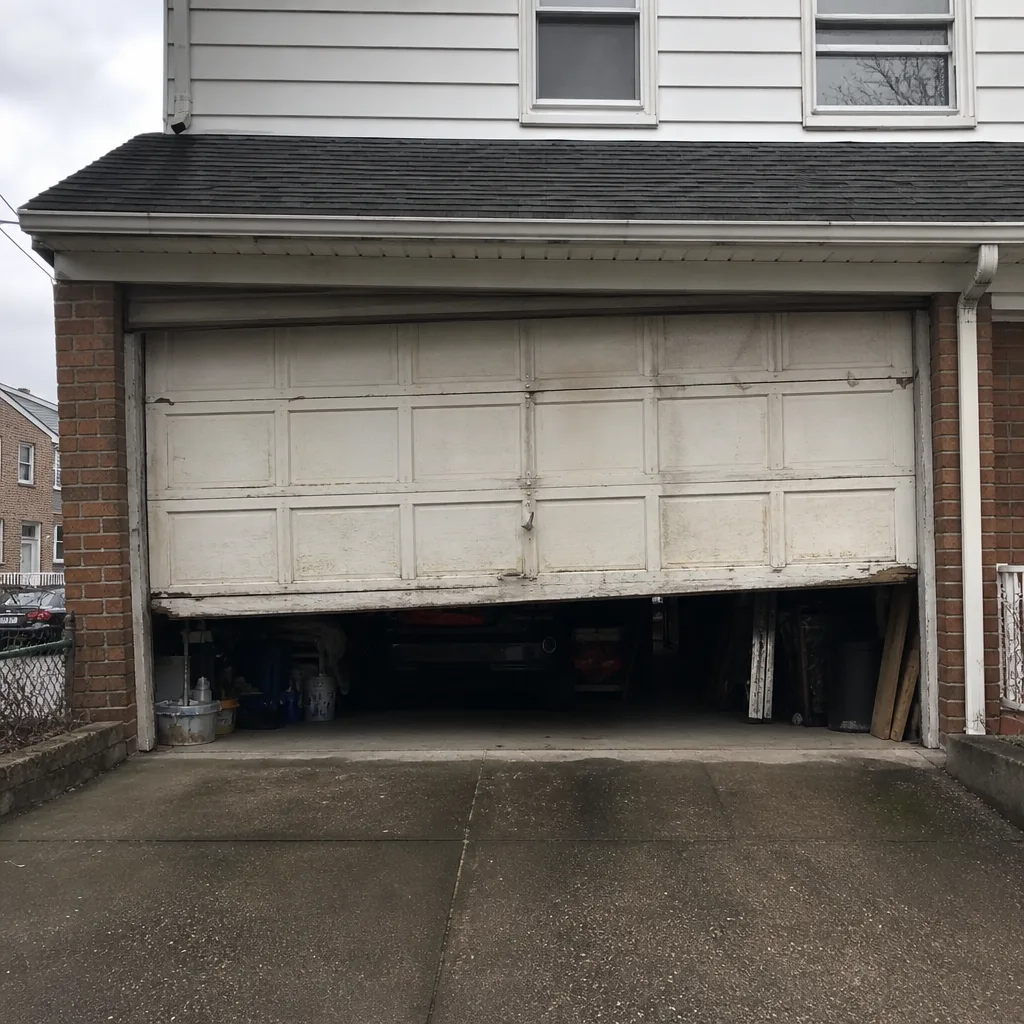 Before
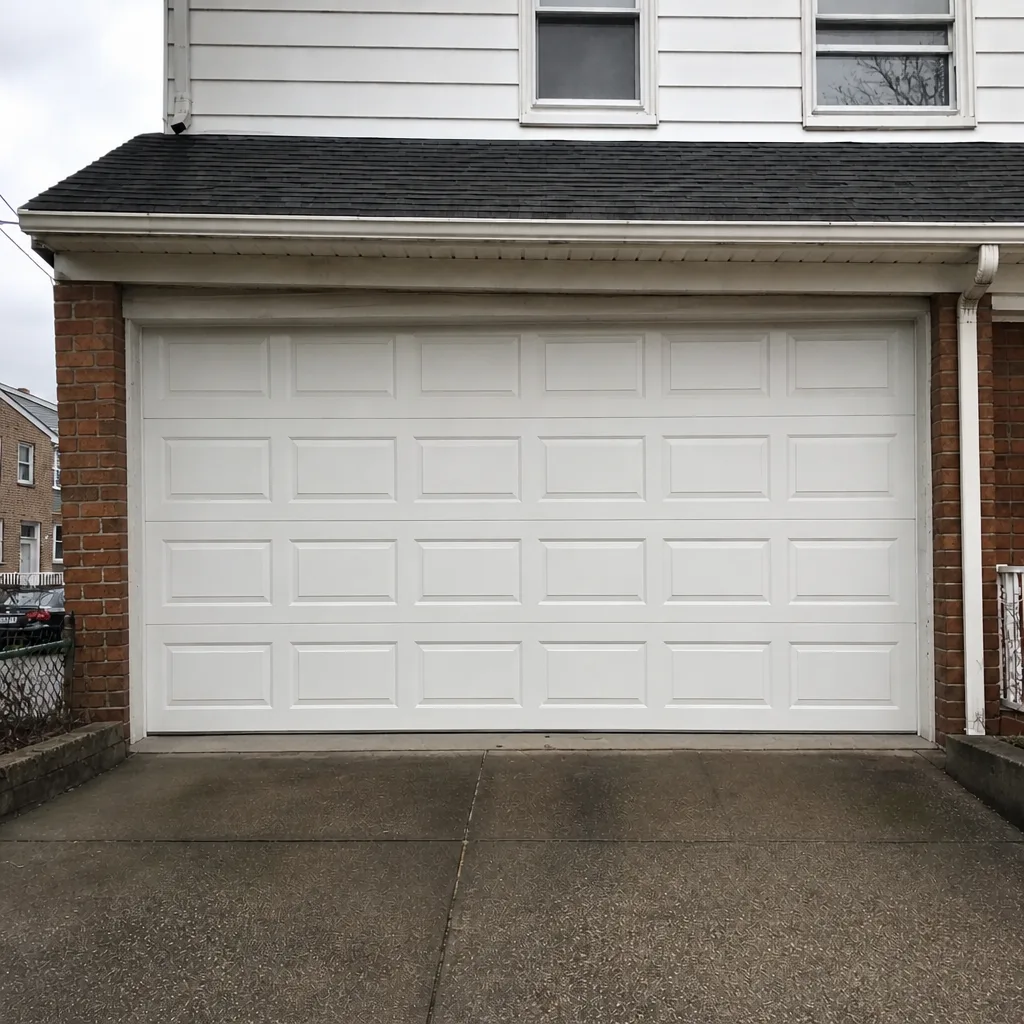 After
When to Call a Professional
Call a professional the moment a warning sign crosses into stop-now territory: a snap, a frayed cable, a visible spring gap, a crooked door, or a door that won’t open and leaves you or your car stuck. On the schedule-soon side, call when a sound or movement problem has persisted more than a couple of weeks, when the door hesitates or shudders, when the opener reverses or stalls, or when you’re just not sure. We’d rather look at a door that turns out to be fine than have you wait on one that isn’t. Springs are a safety job, and the first visit shouldn’t be the one after the door has failed.
Garage Door Repair Borough Park offers free estimates in Borough Park, call (888) 784-3292. Our technicians have up to 8 years of experience, we answer 24/7, and fast dispatch runs 7am to 7pm, Sunday through Friday.
Frequently Asked Questions
A one-to-two-second hesitation before the door opens, often paired with minor shuddering. It usually means spring tension is off, and it’s the most reliable early signal we see in Borough Park’s older attached garages, where limited headroom accelerates spring wear. Don’t wait on a door that hesitates regularly – call (888) 784-3292 for a free estimate.
In our experience, hesitation and minor shuddering typically turn into a failure within about two weeks if ignored, though it varies by how often you use the door. A door cycled several times a day won’t last as long as one used twice a day. The two-week figure is the number we work from, not a guarantee. Call (888) 784-3292 as soon as you notice the hesitation, and the repair stays small.
Yes. Spring repair is a same-day job in most cases, and it’s a specialty we handle directly rather than farming out. If the spring has snapped and the door is stuck, that’s an emergency call, and we answer 24/7. Fast dispatch runs from 7am to 7pm, Sunday through Friday. Call (888) 784-3292 and we’ll get you back up and running today.
A snap followed by a door that’s suddenly heavy, a frayed or slack cable, popping from above the door, a visible spring gap, or a door hanging crooked. These are stop-now signals, because a damaged spring or cable can release stored energy unpredictably. Don’t cycle the door again to check. Call (888) 784-3292, we answer 24/7.
No. The written estimate is the price. We quote and agree on a figure before any work starts, so the number you approve is the number you pay for the agreed work. If we find something additional, we’ll explain it and re-quote before touching anything. Call (888) 784-3292 for an exact quote, estimates are free.
In most cases, the current door can be repaired. Warning signs point to components: springs, cables, rollers, tracks, or the opener, not the panels. A new door is worth considering when the panels themselves are structurally bowed, or when the repair cost approaches the cost of a replacement, which we’ll tell you honestly. For a full replacement, we handle garage door installation as well as repair, and we’ll give you a free written measure and price. Call (888) 784-3292 to book a measure, or a free estimate for a repair.
We connect you with vetted, independent local professionals who are licensed and insured as New York State requires. Work is quoted and agreed in writing before it starts, and every job is a garage door job, not general maintenance. Call (888) 784-3292 for a free estimate.
You can look at them from ground level, and this guide tells you exactly what to look for. What you can’t do safely is touch them. Springs and cables hold enormous stored tension, and the repair is a trained professional’s job in every case. When something looks wrong on your walk-around, call (888) 784-3292 rather than testing it.
The Bottom Line
Garage door failures are rarely sudden. The sound, the movement, and the ground-level visual are usually there weeks before the door stops working, and Borough Park’s older attached garages just make those signs louder and sooner. Read your door once a month. Listen for the new noise, watch for the hesitation, and look at the springs and cables from the ground. When a sign crosses into stop-now territory, stop using the door and call. When it lands on the schedule-soon side, book it before the season turns. A small repair caught early is a much better phone call than a trapped car and a snapped spring. The full range – repair, spring work, opener repair, and new door installation – sits with one specialist, so whichever side of the list you land on, we handle it.
Call (888) 784-3292 for a free estimate. We answer 24/7, and fast dispatch runs 7am to 7pm, Sunday through Friday. Whether your door is stuck, hesitating, or you’re ready for a replacement, we’ll quote and agree on the price before any work starts. Start with a Garage Door Repair Borough Park call today.
Written by the team at Garage Door Repair Borough Park.