
Last updated November 21, 2026
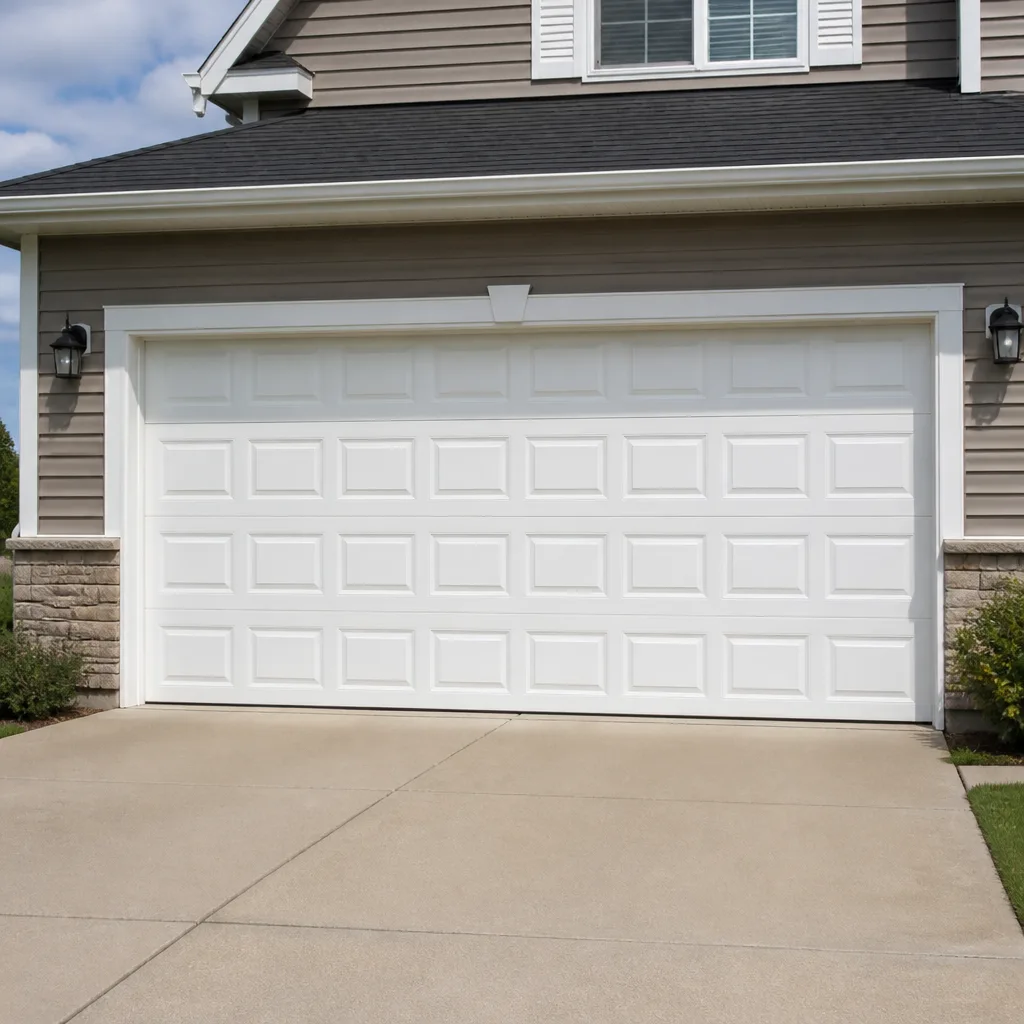 Raised-panel steel
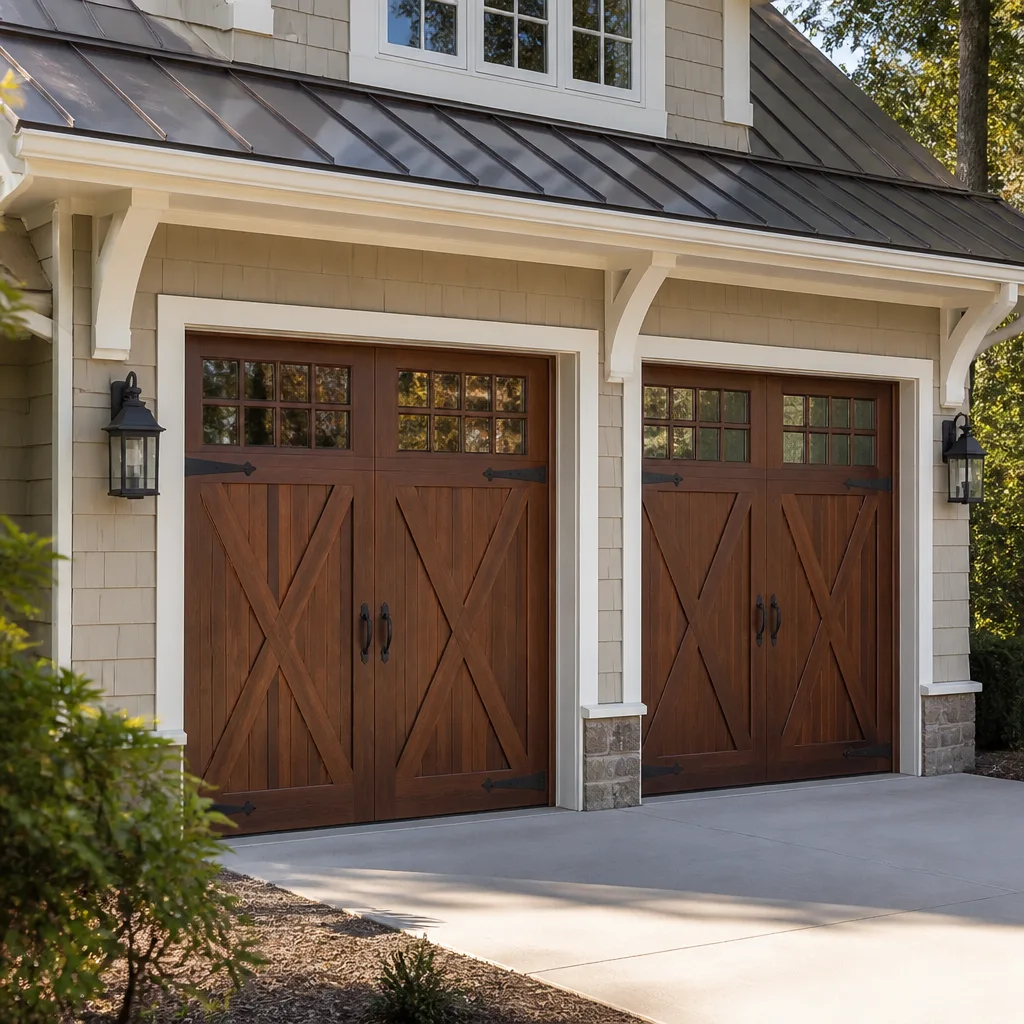 Carriage house
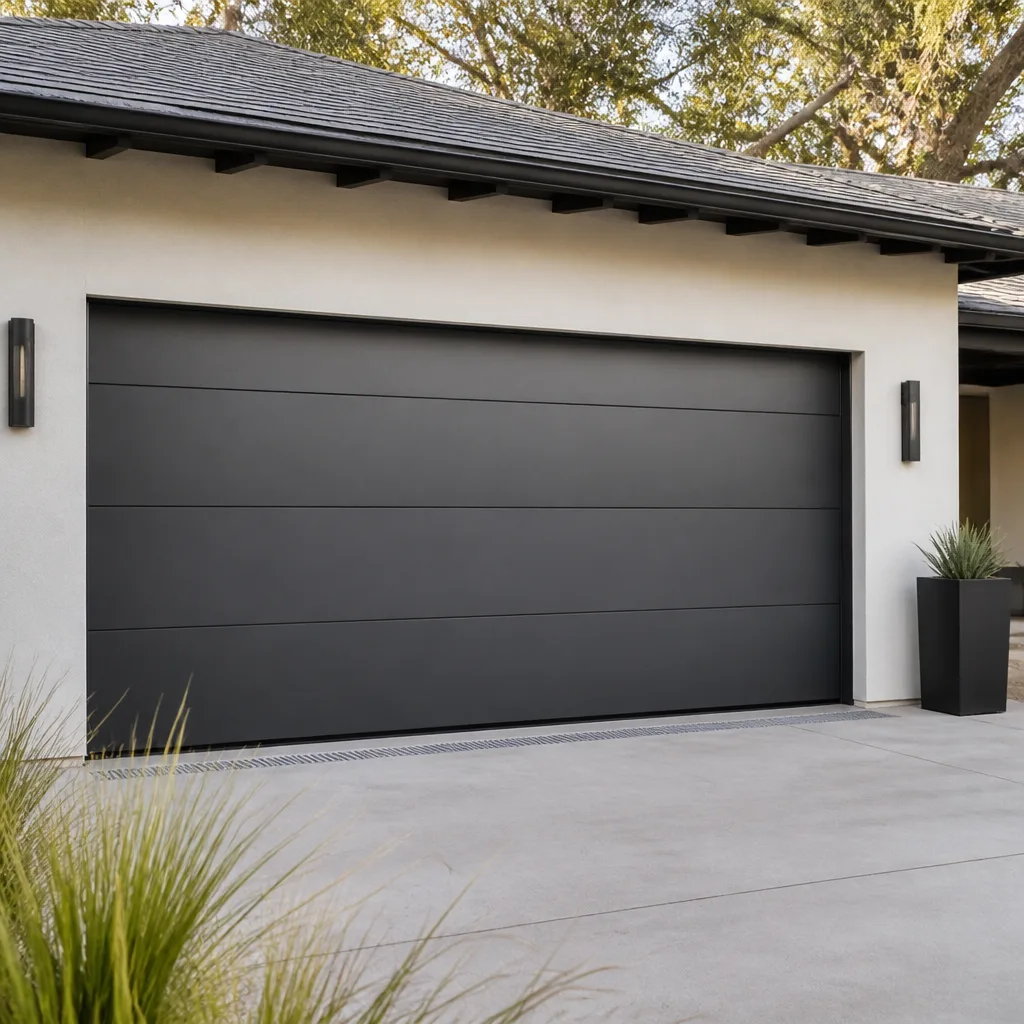 Modern flush
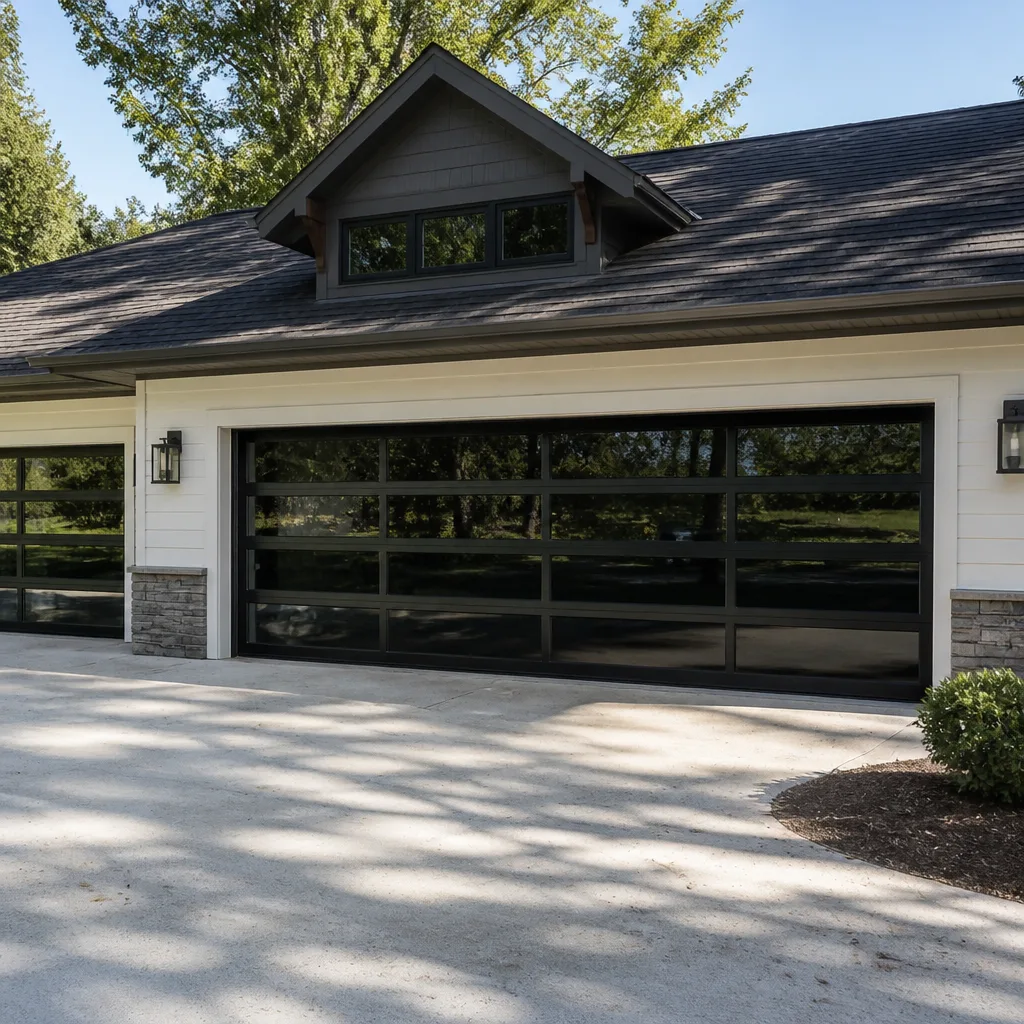 Full-view glass
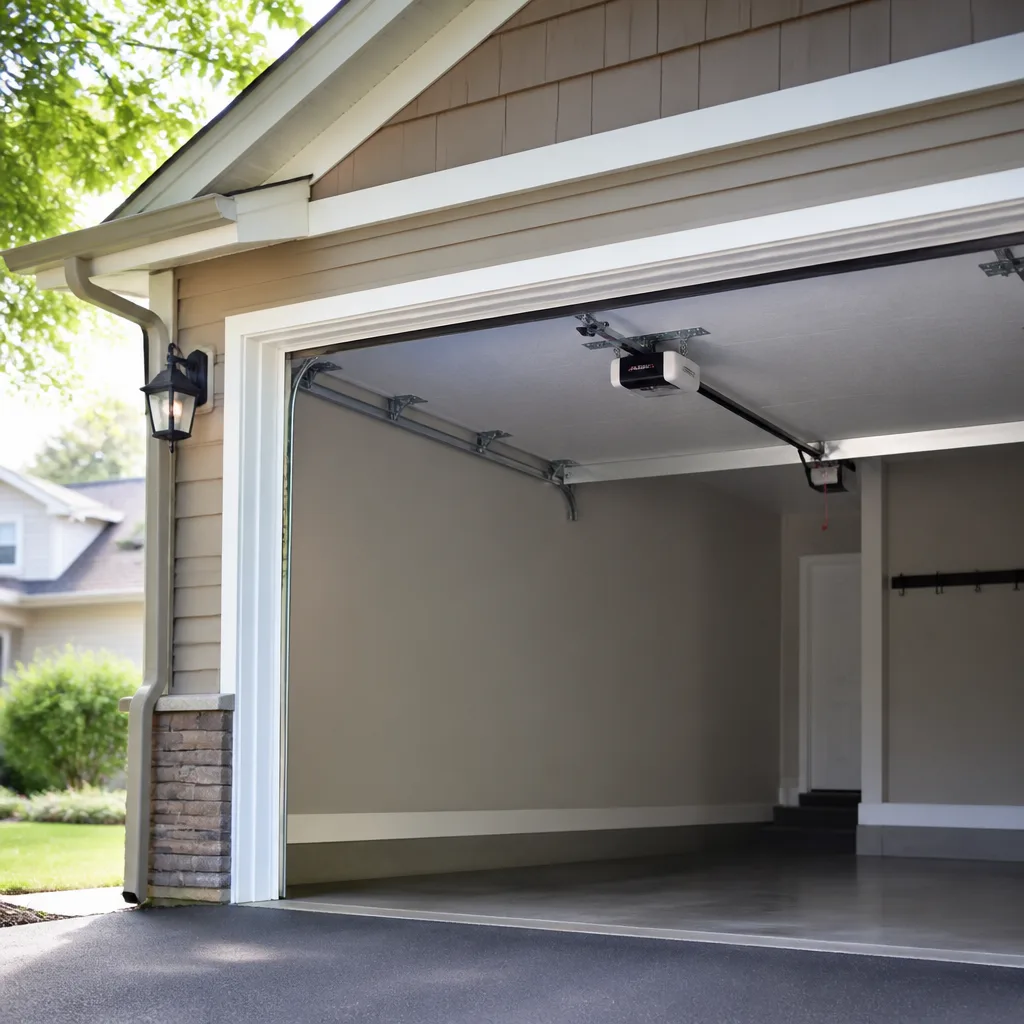 LiftMaster openers
 Chamberlain openers
Full 25-point door and opener safety check with every visit - springs, cables, rollers, tracks, and your LiftMaster or Chamberlain opener included
You get a price before we start. It does not change when the pro arrives.
Get your free estimateGarage Door Emergency Preparedness Guide for Borough Park Homes
Most Borough Park homeowners don’t think about their garage door until it stops working. That’s the problem. A snapped spring or a dead opener doesn’t wait for a convenient moment. It happens when the car is trapped inside and you have somewhere to be. The difference between a minor inconvenience and a full-day ordeal comes down to about 15 minutes of preparation. This guide covers the manual release, what to do when a spring breaks, how to secure a door that won’t close, and how to build a simple emergency routine for your Borough Park home. Here’s what you need to know before something goes wrong.
Quick Answer
If your garage door won’t open because the spring broke or the power is out, use the manual release cord to disengage the opener and lift the door by hand. Never try to force a door with a broken spring, and never attempt to repair the spring yourself. Know where your release cord is, keep your opener’s model number handy, and have a specialist’s number saved before you need it. That’s the whole routine in three sentences. The rest of this guide fills in the details.
Styles & brands we work with
- Raised-panel steel
- Carriage house
- Modern flush
- Full-view glass
- LiftMaster openers
- Chamberlain openers
Table of Contents
- How to Use the Manual Release on Common Openers
- How to Secure a Door That Won’t Close
- What to Do When a Spring Breaks
- Building Your 15-Minute Emergency Prep Routine
- Power Outage Protocol for NYC Grid Interruptions
- Why Battery Backup Openers Are Worth Considering
- Knowing Your Door and Opener Brands
- Seasonal Prep for Borough Park Weather
How to Use the Manual Release on Common Openers
The manual release is the single most important piece of your garage door system that you’ve probably never touched. It disconnects the door from the opener so you can lift it by hand. Every LiftMaster, Chamberlain, Genie, and Craftsman opener has one. The cord hangs from the trolley on the rail, usually with a red or T-shaped handle. Here’s how it works.
- Locate the release cord. It hangs down from the opener rail, usually within reach at adult shoulder height. If you can’t find it, look up. It’s there.
- Pull it straight down and toward the door. You’ll hear a click when the trolley disengages from the carriage. Don’t yank it sideways, and don’t pull hard. A firm, steady pull is enough.
- Lift the door slowly by hand. Use the bottom handle or the frame. A well-balanced door should lift with moderate effort and stay up once open.
- Re-engage the opener before normal use. Pull the release again (or run the opener and let the carriage reconnect automatically on most models), then test the door’s travel before you rely on it.
What not to do: don’t pull the release while the door is partially open with the opener still engaged, and don’t let the door drop once disengaged. If the door feels extremely heavy or won’t stay up, stop. That usually means a spring is compromised, and a door that comes down on its own is dangerous. Instead of fighting it, call a specialist. We answer 24/7 at (888) 784-3292, and fast dispatch from 7am to 7pm. For a full breakdown of repair options, see our garage door repair page.
Release Cord Differences by Brand
Most openers use the same pull-cord design, but the trolley carriage varies. LiftMaster and Chamberlain models generally re-engage automatically when you run the opener after closing the door by hand. Genie and Craftsman models sometimes need a manual tug to re-seat the carriage. If you’re not sure which type you have, check the opener housing – the model number is printed on the back panel or under the light cover. That number matters more than you’d think.
How to Secure a Door That Won’t Close
A door that won’t close isn’t just annoying. In Borough Park, where many garages face alleys or shared driveways, an open door is a real security and weather problem. Before you try to force it, figure out why it’s stuck. The panel safety sensors near the floor are the most common culprit – something as small as a leaf, a bike tire, or a shifted sensor bracket can stop the door from traveling down.
- Check the safety sensors first. Both sensors should have a solid light. If one is blinking, something is breaking the beam or the sensor has been knocked out of alignment.
- Look for obstructions on the track. Debris, a bent track section, or a roller that’s jumped out of the track will stop the door.
- Do a manual close if the opener fails. Disengage the release cord and lower the door by hand until it contacts the floor.
- Lock it from the inside when you can. Most doors have a manual slide lock or latch. If you can access the garage from inside the house, use it until repairs happen.
If the door won’t close at all – say, a broken cable or a warped panel – secure the opening with what you have and call for service. Don’t leave an alley-facing door open overnight. That’s the kind of thing that’s easy to prevent and expensive to regret. The written estimate always comes before any work starts, so you’ll know the price before the job begins.
What to Do When a Spring Breaks
When a torsion spring snaps, it sounds like a gunshot. That’s the honest description. It’s one of the loudest failures in any home, and it’s also one of the most dangerous if handled wrong. Springs are under extreme tension. That tension is what lifts a door that can weigh hundreds of pounds. When the spring lets go, the door becomes dead weight on the opener and cables.
Immediate Safety Steps
- Step back and keep everyone away. Don’t stand under the door. Don’t try to lift it. Don’t touch the cables.
- Leave the door in place if it’s down. A closed door with a broken spring is stable. Leave it.
- Don’t run the opener. If the door is down and the opener still works, don’t cycle it. Running the opener against a broken spring can strip the gear or damage the carriage.
- Call a specialist. Spring repair is the one garage door job that should never be a homeowner project. The tools and technique required are specific, and the injury risk is real.
In our experience, the most common secondary damage we see comes from homeowners trying to force the door or run the opener after a spring failure. Both turn a spring repair into a much bigger job. A broken spring isn’t a DIY moment. It’s a stop-and-call moment.
Spring repair is a named specialty here, and it’s the job we take most seriously. A single spring replacement is typically quoted per spring, and a matched pair is usually replaced together because the two wear at the same rate. If you’re pricing the work, our Garage Door Repair Borough Park page lays out what to expect. The call is free. The estimate is free. And the price is agreed before anyone touches the door.
Building Your 15-Minute Emergency Prep Routine
You don’t need a toolbox for this. You need 15 minutes, a phone, and a piece of paper. Do this once and you’ll never be caught flat-footed by a broken door again.
- Find your opener’s model number. It’s printed on the back panel or under the light cover. Write it down and photograph it. LiftMaster, Chamberlain, Genie, and Craftsman all print it in a slightly different place, so take the photo now rather than in the dark.
- Find your door’s model and serial number. Look on the inside of the door panel or the frame. If you have an Amarr, Wayne Dalton, or Raynor door, that number tells a specialist exactly which parts fit.
- Mark the manual release location. A small piece of bright tape on the cord or a note inside the garage door makes it findable in a hurry.
- Test the release once. Pull it, lift the door a foot, lower it, re-engage. Knowing it works and how it feels takes the panic out of a real emergency.
- Save the number. Put a garage door specialist in your phone contacts under “Garage.” Add (888) 784-3292 to that contact.
- Check the door balance annually. Disengage the opener and lift the door halfway. If it stays put, the springs are balanced. If it drops or rises on its own, the springs need attention.
That’s the whole routine. Do it on a calm afternoon, not during a storm. A Borough Park homeowner who’s done this once is never stuck guessing at 7am with a car trapped inside.
Power Outage Protocol for NYC Grid Interruptions
Borough Park sees its share of grid interruptions. Summer storms, winter ice, and the occasional equipment failure on the local lines all knock out power. When the power goes, a standard opener is dead weight – it won’t lift the door. That’s when the manual release earns its keep.
- Disengage the opener first. Pull the release cord before you try to lift. Don’t fight the opener’s resistance.
- Lift and prop the door open if you need to move the car. If the door is balanced, it should stay up. Use a physical prop only if it won’t hold – and never prop it with anything that could shift.
- Leave the door closed if you don’t need access. A closed door is the most secure door. There’s no reason to open it just because the power is out.
- Check the breaker before assuming a grid outage. A tripped breaker on the garage circuit looks the same as a blackout from inside the garage. Flip it and test.
If the power is out for an extended stretch, don’t cycle the opener repeatedly once power returns. Let it run through a full open and close cycle once to reset the travel limits, then test the safety sensors. If the door behaves strangely after a power event, that’s often a limit switch or a control board issue – worth a call. Our garage door opener repair page covers the common post-outage failures.
Why Battery Backup Openers Are Worth Considering
A battery backup opener keeps working when the grid doesn’t. It’s a built-in battery that runs the opener for a limited number of cycles after the power dies. For a Borough Park home where the garage is the main vehicle exit, that’s the difference between driving to work and calling a car service.
If you’re replacing an opener or installing a new door, ask about battery backup specifically. LiftMaster and Chamberlain both make backup-equipped models, and the feature is increasingly common on new openers. For homes with frequent outage history, it’s one of the more practical upgrades you can make – not because it’s flashy, but because it removes the manual-release scramble from the equation entirely.
If your opener is older and doesn’t support backup, you have two paths: replace the opener, or master the manual release and accept the tradeoff. Either is fine. What’s not fine is not knowing which one you have. If you’re weighing a new opener or a full door replacement, our garage door installation page walks through the options and what to expect from a written estimate.
Knowing Your Door and Opener Brands
Brand knowledge isn’t a sales point. It’s a practical one. The parts that fail on an Amarr door aren’t always the same ones that fail on a Wayne Dalton, and the opener programming sequence on a LiftMaster is different from a Genie. When you know your brand and model, the repair goes faster and the right part shows up the first time.
We service eight major brands: LiftMaster, Chamberlain, Genie, Clopay, Amarr, Wayne Dalton, Craftsman, and Raynor. That range matters for Borough Park homes because the housing stock here is varied. Some garages have original doors, some have been updated, and many have a mix of an older door and a newer opener. Factory-trained fluency across those brands means we’re not guessing at your system when we arrive. Our technicians have up to 8 years of experience, and every job is a garage door job – not a side project between other trades.
If you don’t know your brand, the door’s model sticker or the opener’s back panel will tell you. Snap a photo before you call. It saves time on both ends. For an opener that’s acting up, the fastest path is usually a diagnostic call – and our dispatch runs Sunday through Friday, 7am to 7pm.
Seasonal Prep for Borough Park Weather
Borough Park winters are hard on garage doors. Cold contracts metal, stiffens lubricant, and makes the door’s moving parts work harder. The freeze-thaw cycle also moves the ground under the tracks, and a track that shifts even slightly can throw the door out of alignment. A few minutes of prep before the cold settles in pays off all season.
- Lubricate the moving parts. Rollers, hinges, and the torsion bar benefit from a garage-door-specific lubricant before the first hard freeze. Don’t use heavy grease – it thickens in the cold.
- Test the door balance. Cold weather makes a marginal spring fail. If the door feels heavy when you lift it by hand, the springs are already tired.
- Clear the tracks. Ice, grit, and salt tracked in from the street can jam the rollers. A dry brush on the tracks handles most of it.
- Check the weather seal. A worn bottom seal lets cold air and moisture in, and it can freeze to the floor. If the door sticks when you open it on a cold morning, the seal is the first thing to check.
Winter is also when we see the most emergency calls. A spring that was hanging on in October tends to let go in January. Prep now, and you won’t be the one calling in the middle of a cold snap.
Common Mistakes to Avoid
- Forcing a door with a broken spring. A door with a snapped spring can weigh hundreds of pounds. Lifting it by hand can cause the door to come down or the cables to snap. Stop and call a specialist.
- Pulling the manual release while the door is up with the opener engaged. This can drop the door unexpectedly and damage the carriage. Always disengage with the door fully closed.
- Leaving an alley-facing door open overnight. In Borough Park, where many garages open onto shared alleys, an unsecured door is a security gap. Secure it before you go to bed, even if the repair has to wait.
- Trying to adjust the springs yourself. Torsion springs store enough energy to cause serious injury. This is the one repair that should always be a professional job.
- Ignoring a blinking sensor light. A blinking sensor is the most common reason a door won’t close. Check the beam before assuming a bigger problem.
- Running the opener repeatedly after a power outage. Cycling an opener against a misaligned door can strip the gear or burn out the motor. Run one full cycle, test the travel, then stop.
- Not knowing your model numbers. Without them, a technician has to spend time identifying your system instead of fixing it. A photo of the sticker saves a step.
See the difference
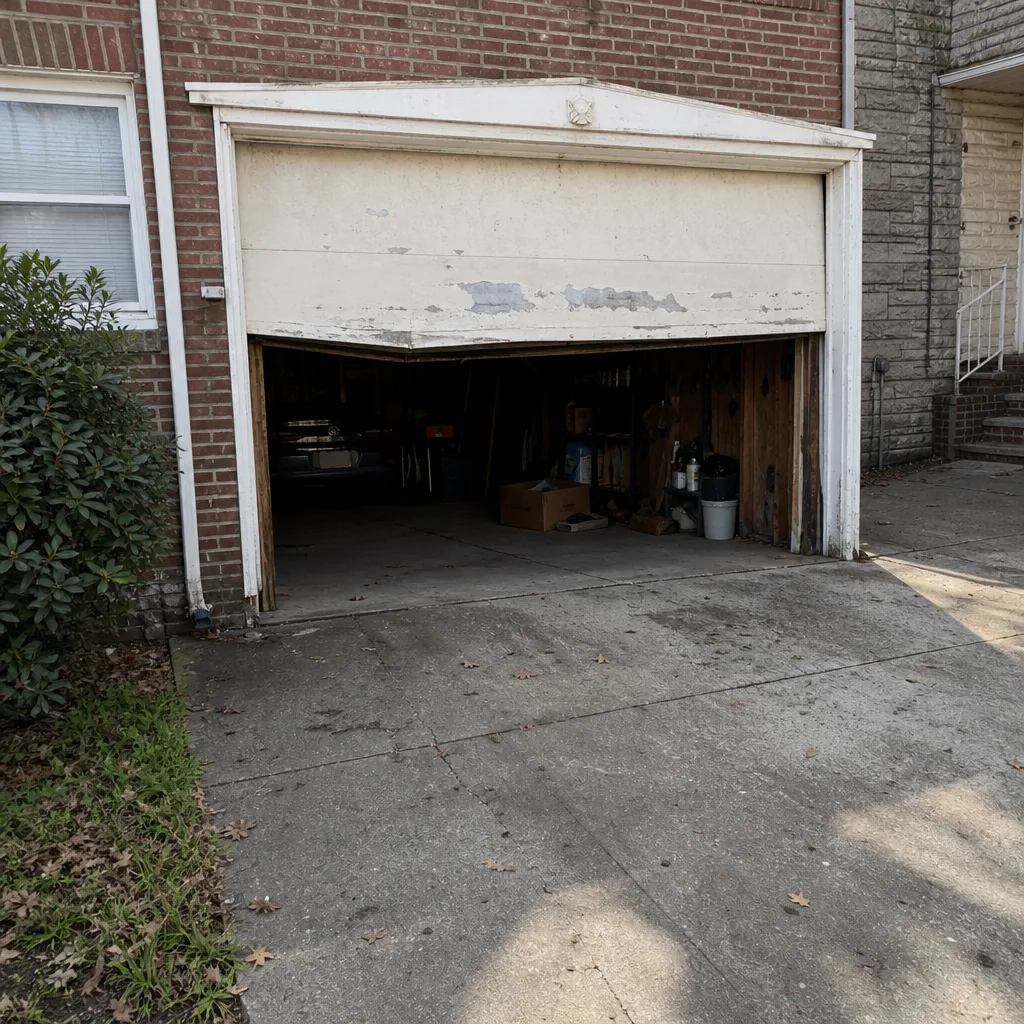 Before
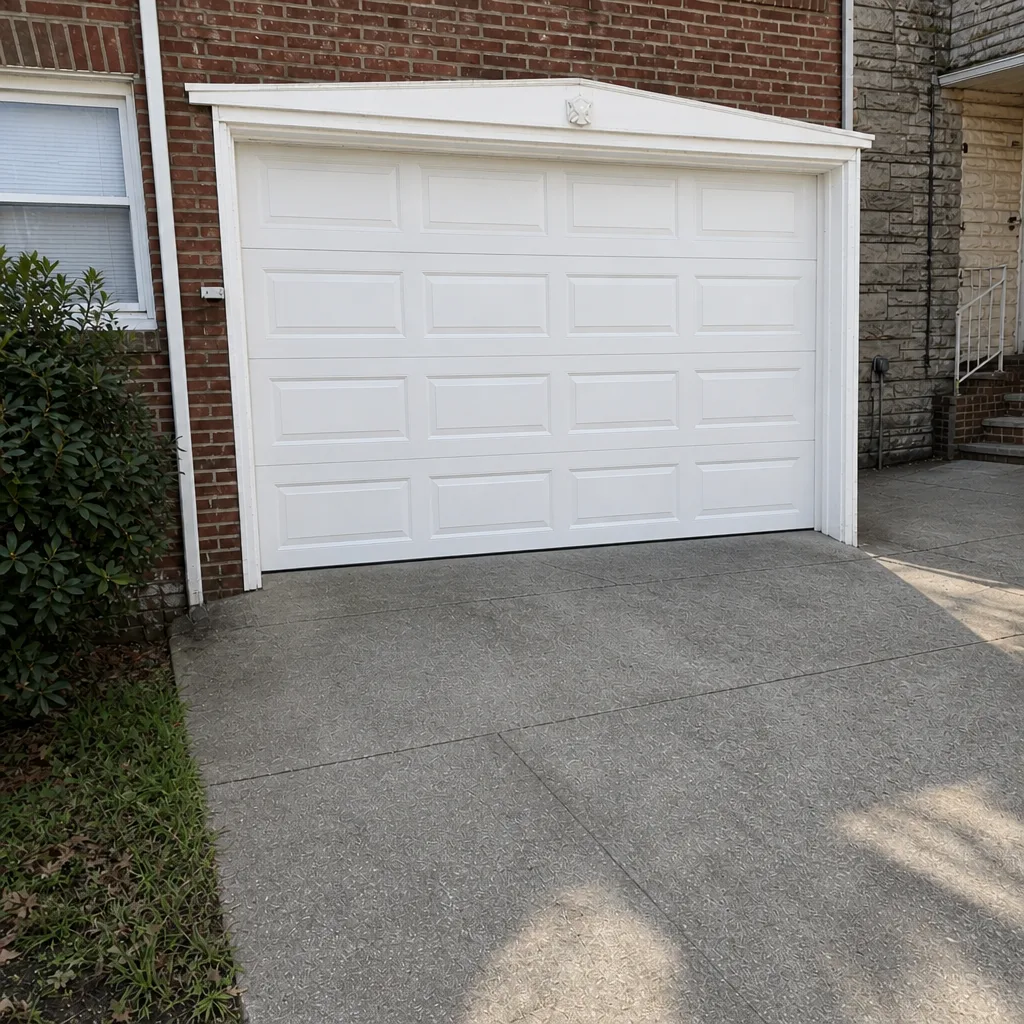 After
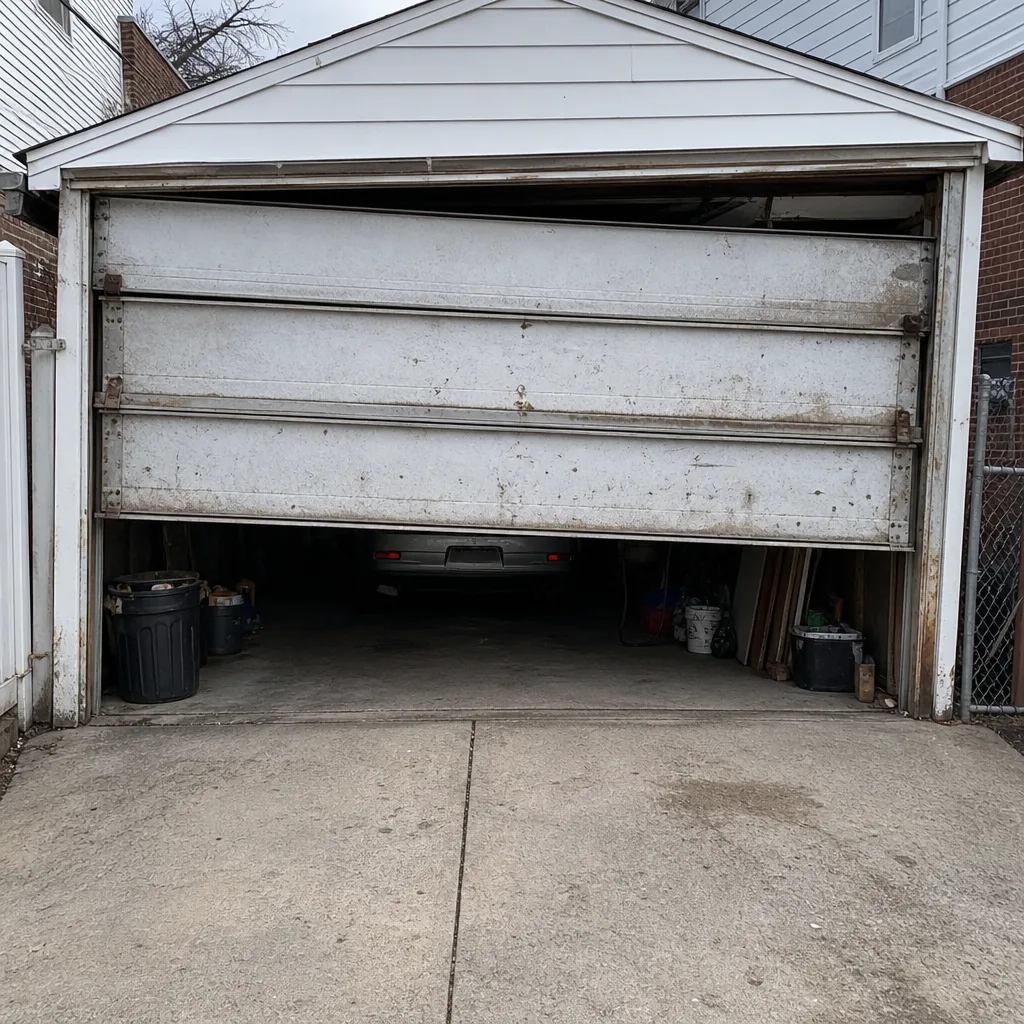 Before
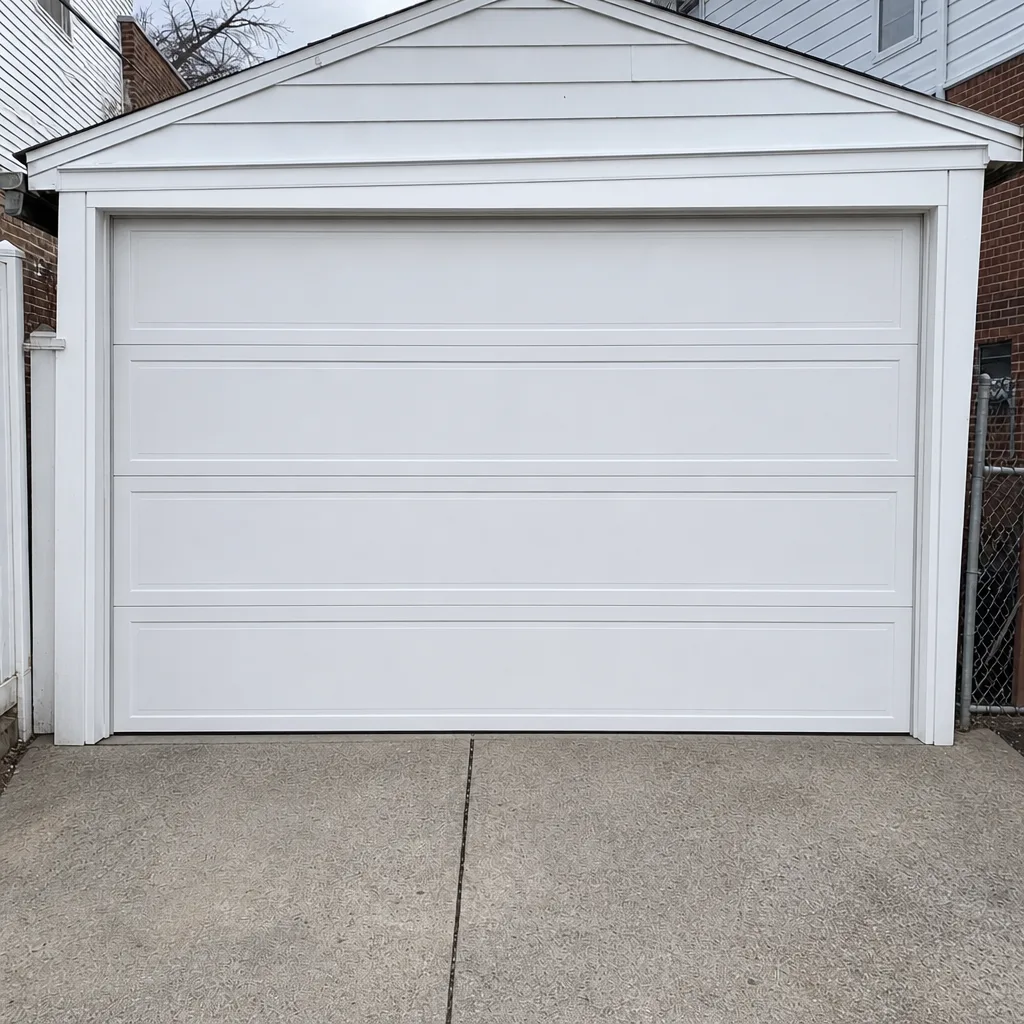 After
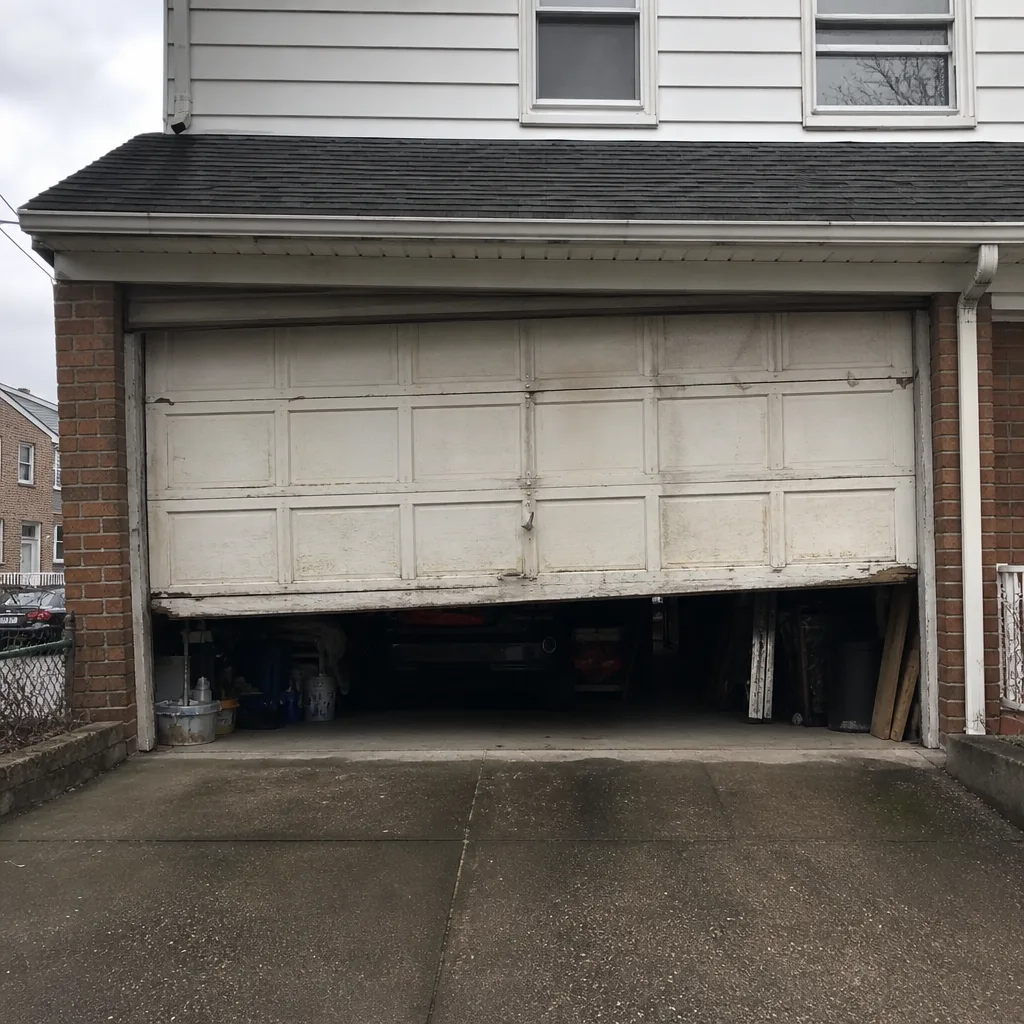 Before
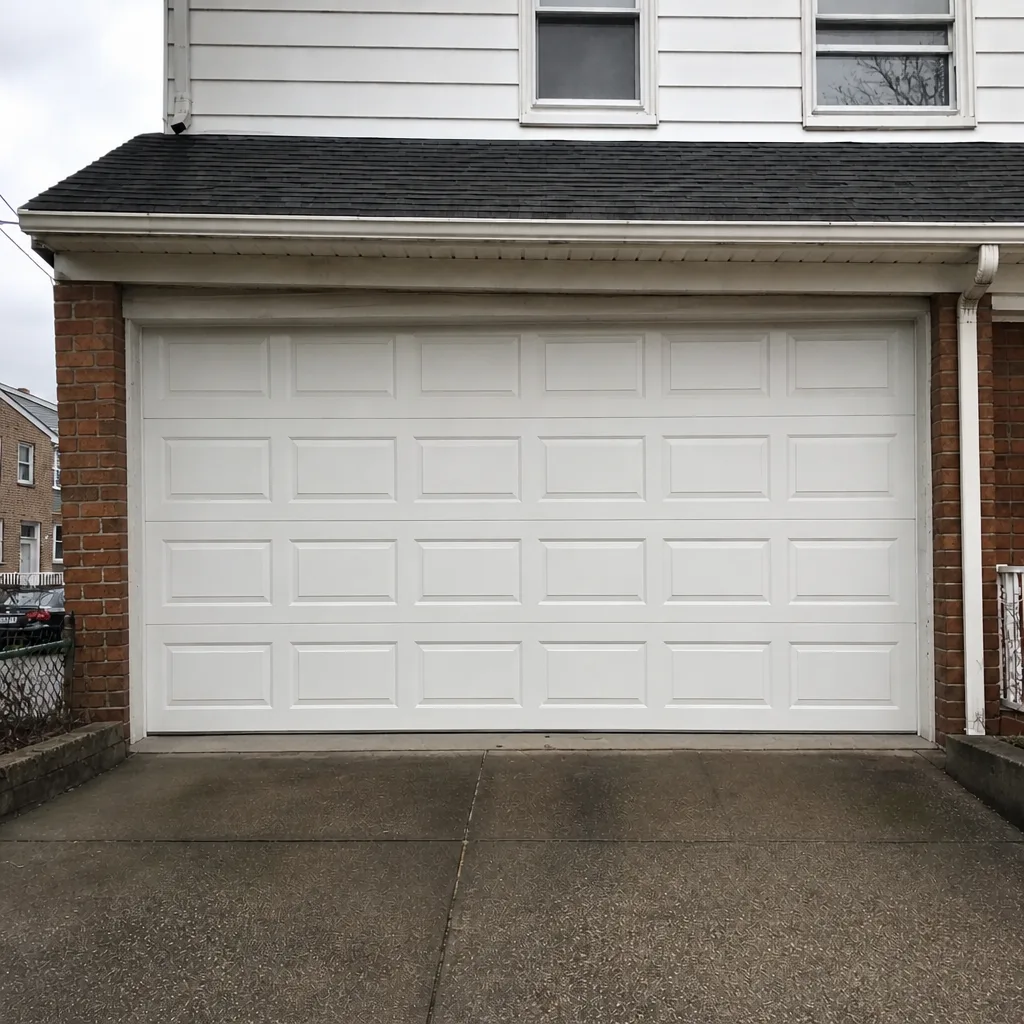 After
When to Call a Professional
Some garage door problems are a five-minute fix. Others need a specialist. The line between them is clearer than most homeowners think. Call a professional if the spring is broken, if the door comes down on its own, if the cables are loose or frayed, if the door is off its tracks, or if the opener runs but the door doesn’t move. Those are the situations where DIY turns a repair into a replacement. A door that’s merely noisy or slightly slow is usually a lubrication and adjustment job – worth having checked, but not an emergency. If you’re not sure which category you’re in, call and describe what’s happening. We answer 24/7. Fast dispatch from 7am to 7pm, Sunday through Friday, and we’re closed Saturday. Garage Door Repair Borough Park offers free estimates in Borough Park – call (888) 784-3292. The price is quoted and agreed before any work starts, so you won’t get a surprise invoice.
Frequently Asked Questions
Spring repair is priced per spring, and most homes need a matched pair replaced together, so a pair costs roughly twice a single spring. You’ll get an exact written estimate before any work starts, and that quote sets the final price. Call (888) 784-3292 for a free estimate.
Same-day service is available for urgent problems like a stuck door or a broken spring. Call (888) 784-3292, and we’ll get a technician out as fast as the schedule allows. Fast dispatch runs from 7am to 7pm, Sunday through Friday.
No. The written estimate is the price. We quote the job before any work begins, and the number you agree to is the number you pay. If we find something unexpected once the door is open, we tell you first and get your approval before doing anything extra.
The local professionals we connect you with are licensed and insured as their state requires. Our technicians have up to 8 years of experience, and every job is a garage door job. For a free estimate, call (888) 784-3292.
Check the safety sensors first – a blinking light means something is breaking the beam, and that’s usually a quick fix. If the door still won’t close, disengage the opener and lower it by hand, then lock it from the inside. Don’t leave an alley-facing door open overnight. Call (888) 784-3292 to book a repair.
A battery backup opener is worth considering if your area sees frequent power interruptions, since it keeps the door working when the grid is down. It isn’t required, but it removes the manual-release scramble from an outage. Ask about backup models when you’re replacing an opener.
Springs fail from fatigue, and the break usually happens after thousands of open and close cycles. Cold weather can be the final straw, which is why many failures happen in winter. There’s rarely a visible warning before it snaps, but a door that’s been feeling heavier is a sign the spring was already tired.
If the door won’t lift by hand after you disengage the opener, the spring is likely broken or the door is badly out of balance. Don’t force it. A door that’s too heavy to lift manually can come down hard. Leave it closed and call (888) 784-3292 for service.
The Bottom Line
Garage door emergencies are almost always preventable. The 15 minutes you spend finding your manual release, photographing your model numbers, and saving a specialist’s number is the difference between a quick fix and a lost day. Know how to disengage your opener. Never force a door with a broken spring. Secure an alley-facing door before you go to bed. And keep (888) 784-3292 in your contacts. In Borough Park, the weather and the housing stock both put real wear on garage doors, so prep isn’t paranoia – it’s maintenance. Do the routine once, and you’ll be ready when the door isn’t.
Written by the team at Garage Door Repair Borough Park.